Choosing the right 7 1/4 inch circular saw blade with a wide kerf is essential for smooth, accurate cuts in woodworking and metalworking projects. Wide kerf blades remove more material, making them ideal for demanding tasks like framing and heavy-duty cutting. Below is a summary table profiling the top five blades that deliver durability, efficiency, and performance for various cutting needs.
| Product | Brand | Kerf | Teeth | Primary Use |
|---|---|---|---|---|
| IRWIN Classic Series 7 1/4″ 140T | IRWIN | 0.087 inch | 140 | Fine woodworking, smooth accurate cuts |
| HardWin 7 1/4″ Framing 3-Pack, 40T | HARDWIN | 0.06 inch (ultra-thin) | 40 | Wood, plywood, MDF, softwood precision cutting |
| FOXBC 7 1/4″ 48T Metal Cutting | FOXBC | 0.075 inch | 48 | Metal, stainless steel, steel studs cutting |
| Diablo Ultra Finish 7 1/4″ 60T | Diablo | Not specified | 60 | Fine finish woodworking |
| DEWALT 7 1/4″ Thin Kerf 20T Blade | DEWALT | Thin kerf | 20 | Pressure treated and wet lumber |
IRWIN Tools Classic Series 7 1/4-Inch 140 Tooth Blade

The IRWIN Classic Series 7 1/4-inch 140T blade delivers ultra-fine, precision-ground teeth designed for smooth and highly accurate cuts. The .087-inch kerf creates a stable cut line, reducing tear-out on delicate wood and finish materials. Crafted from heavy-gauge, high-carbon steel, this blade runs truer for longer with a hardened plate that reduces wobble and wear. It is ideal for detailed carpentry and finish work that demands accuracy and a clean edge.
HardWin 7 1/4 Inch Framing Circular Saw Blade 3-Pack, 40T
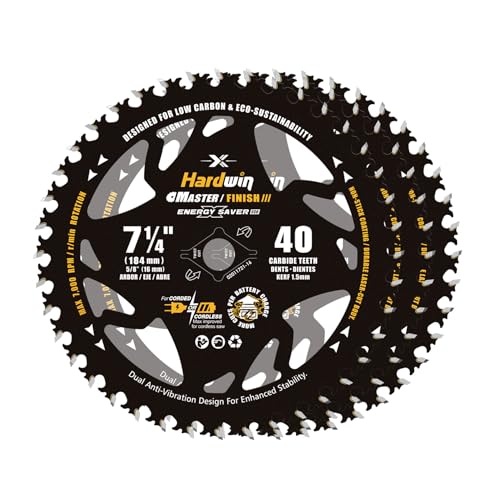
The HardWin 3-Pack framing blades feature 40 carbide teeth with an aggressively sharp atmosphere bevel (ATB) tooth design. Their 1.5mm ultra-thin kerf (approximately 0.06″) minimizes material waste and reduces cutting resistance, benefitting cordless saws by improving battery life and cutting speed. The lightweight design cuts through wood, plywood, MDF, and hardwood efficiently. A rust-proof, anti-stick black coating helps prevent resin buildup, ensuring smooth cuts in demanding jobsite conditions.
FOXBC 7-1/4 Inch Metal Cutting Circular Saw Blade, 48 Teeth

Specifically engineered for cutting metal, the FOXBC 7 1/4-inch blade sports 48 teeth with ceramic carbide tips and a .075-inch kerf. It handles steel studs, stainless steel, EMT conduit, angle iron, and rods with wall thickness between 1/16″ to 1/2″. This blade integrates a diamond knockout for easy replacement and works with both corded and cordless circular saws with a 5/8″ arbor. Its durable construction supports high-speed cuts up to 5800 RPM, providing versatility for metal fabricators and remodelers.
Diablo Ultra Finish 7 1/4-Inch 60 Tooth Circular Saw Blade

The Diablo Ultra Finish blade offers 60 teeth optimized for fine finishing cuts. It’s tailored to deliver smooth edges on trim work, cabinetry, and detailed woodworking projects. While exact kerf measurements are unspecified, the blade is renowned for its durable carbide teeth that stay sharp, efficiently reducing sanding. This option is best suited for users prioritizing finish quality on hardwoods and manufactured wood products.
DEWALT 7-1/4 Inch Thin Kerf Circular Saw Blade, 20 Tooth

The DEWALT 7 1/4-inch blade with 20 tungsten carbide teeth is designed for cutting pressure-treated and wet lumber effectively. Its thin kerf improves cutting speed and reduces waste, making it ideal for framing and deck-building applications. The blade includes a specialized anti-stick coating to minimize friction and gum-up, which helps maintain smooth cuts over time, especially in lumber with resin or moisture content.
Buying Guide: Choosing the Right 7 1/4 Inch Circular Saw Blade With Wide Kerf
Kerf Width and Material Removal
The kerf width determines how much material the blade removes during each cut. Wider kerf blades (around 0.087 inches or higher) offer better stability and prevent blade wobble but generate more material waste and require more motor power. Thinner kerf blades (0.06 to 0.075 inches) reduce waste and require less cutting force, improving battery life for cordless saws and enhancing cut speed.
Number of Teeth and Cut Quality
Blades with a high tooth count (100+ teeth) produce finer, smoother cuts perfect for cabinetry and finish work but cut more slowly. Lower tooth counts (20 to 40 teeth) increase cutting speed and aggressiveness, suitable for framing and rough cuts. Medium tooth counts offer a balance between speed and smoothness, ideal for general-purpose use.
Blade Material and Tooth Construction
High-quality tungsten carbide teeth enhance wear resistance and long-term sharpness. Ceramic carbide tips are ideal for metal cutting applications, providing hardness to slice through tough materials. Steel plates with hardened treatments ensure blade stability and reduce distortion during high-speed operation.
Coatings for Performance and Durability
Anti-stick and rust-resistant coatings reduce resin buildup and friction, resulting in smoother cuts, less gumming, and extended blade life. For outdoor or wet lumber tasks, coatings help maintain blade integrity and cut efficiency.
Application and Material Compatibility
Select blades based on your primary cutting materials: wood, plywood, MDF, metal, or wet lumber. Wood blades usually have ATB (alternate top bevel) tooth designs for clean cuts, while metal blades feature specialized carbide tips and low tooth counts for efficient metal slicing.
Arbor Size and Saw Compatibility
Ensure the blade’s arbor size matches your circular saw shaft, typically 5/8 inch for 7 1/4 inch blades. Compatibility with cordless or corded saws is important for power requirements and performance.