Finding reliable power for door locks and keyless entry systems is essential for security and convenience. This article highlights five strong battery-backed options and smart lock components that align with common door-lock setups. Each product is evaluated by compatibility, battery type, and practical use cases to help you choose the right power source for residential and office doors.
Summary of selected products:
- WERPOWER Door Lock Battery Pack, 7V — Alkaline, 2200mAh, fits Alarm Lock Trilogy
- TEEHO TE001 Keyless Entry Door Lock with Keypad — Smart 2-Key Auto-Lock for front doors
- Megaflint Mechanical Keyless Entry Deadbolt — 100% Mechanical with keypad
- eufy Security Smart Lock C220 — Fingerprint, built-in Wi‑Fi, long battery life
- ThorBolt Door Lock Knob with Keypad — 4x AA, anti-peep keypad technology
Best Battery Pack For Alarm Door Locks

The Door Lock Battery Pack from WERPOWER is a compact alkaline option designed for alarm door locks. It specifies a 7V alkaline chemistry with a 2200mAh capacity suitable for specific alarm lock models. The pack measures about 2 by 2.75 inches, offering a compact fit for limited space behind or beside a lock body. Operational temperature range is listed as 30–150 degrees Fahrenheit, which covers typical indoor environments and some sheltered outdoor areas. This option is a straightforward, single-use power supplement when standard coin or lithium batteries are not the preferred choice.
Key considerations include compatibility with the Alarm Lock Trilogy line and the need for periodic replacement. If your door lock relies on alkaline power, this pack provides a practical alternative to primary cells. When replacing, verify the exact fit and any required adapters for your model. For households with frequent door activity, track battery life to avoid lockouts due to dead power. Users should also verify any local warranty implications when substituting battery types in smart or connected locks.
Smart Keypad Lock With Auto Lock
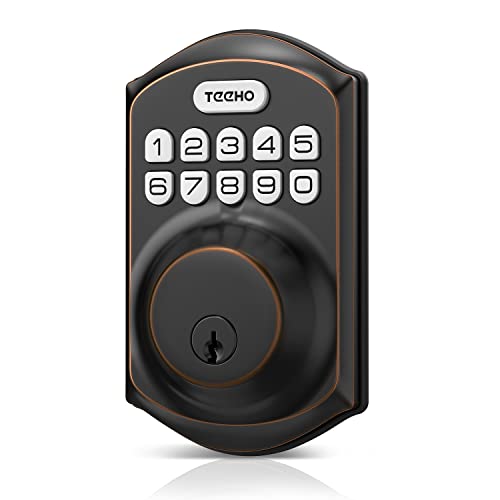
The TEEHO TE001 is a feature-rich keyless entry lock featuring a keypad with 20 access codes plus a temporary one-time code. Designed for front doors, it offers automatic locking after a user-selected interval (10–99 seconds) and a quick auto-lock by holding any keypad key for two seconds. The installation is described as easy, and the product ships with two physical keys for backup access. This model emphasizes convenience for families and guests, making it a popular choice for entry doors that require hands-free locking after entry.
Given its smart capabilities, consider the power needs and battery type recommended by the manufacturer. It is important to understand how often you may replace batteries and whether the lock supports low-power indicators. If a hands-free home automation routine is a goal, compatibility with smart home ecosystems and the reliability of the keypad under frequent use should be weighed against the initial installation effort. This option suits homes prioritizing rapid entry with flexible access codes while maintaining solid lock integrity.
100% Mechanical Keyless Entry With No Electronics

Megaflint offers a fully mechanical, keypad-equipped deadbolt that operates without electronics. This design eliminates battery dependence, relying instead on a mechanical system that accepts a passcode or key. The installation notes suggest potential adjustments to door components to accommodate the borehole size, and the standard fit is for doors with boilerplate dimensions. The lock measures around 5.5 by 3.25 inches and supports doors with a borehole up to 2 1/8 inches in diameter. It is suitable for both left- and right-handed doors and can handle interior or exterior openings depending on mounting.
Choosing a mechanical option can be advantageous in environments where battery reliability is a concern or where electronic failures would be problematic. However, it sacrifices some digital conveniences and remote control features. Evaluate whether your security needs lean toward a simple, maintenance-light solution or if you prefer smart features such as app control and activity logs. This option is ideal for users seeking steady, non-electronic operation with a keypad security layer.
eufy Security Smart Lock C220 With Built-In Wi‑Fi

The eufy Security Smart Lock C220 combines fingerprint recognition with built-in Wi‑Fi for remote control. With a battery life expectation of around eight months on a set of eight AA batteries, this lock emphasizes long-term power efficiency and includes multiple unlock methods: fingerprint, app, keypad, Apple Watch, voice assistants, and traditional keys. The device integrates with the eufy ecosystem for routine management, real-time notifications, and event history. IP53 waterproof rating provides some protection against dust and water exposure, making it suitable for exterior doors under covered conditions.
From a power perspective, this model is attractive for users who want seamless remote access and robust integration with home automation. Battery life can vary with usage patterns, especially with frequent biometric unlocks or app interactions. The built-in Wi‑Fi simplifies setup but requires a stable network connection. Consider whether your door environment benefits from a centralized security ecosystem and whether you want the option to integrate this lock with other smart devices in your home system.
ThorBolt keypad Door Knob With Battery Power

The ThorBolt door lock knob combines keypad access with a traditional keyed backup, using four AA alkaline batteries for power. It features 2-in-1 convenience with passcodes or a key, and a built-in auto-lock function that activates after five seconds of inactivity. An anti-peep feature scrambles codes to protect entry privacy, a practical safeguard against onlooker attacks. The installation is designed to be DIY-friendly, with a four-step process and the option to power through a USB Type-C port if needed. The unit supports up to 100 passcodes for diverse access management.
When evaluating power, consider battery replacement frequency and the reliability of the backup key option. The anti-peep technology helps defensively against code compromise, but regular maintenance remains necessary to ensure consistent performance. This option is appropriate for interior doors or exterior doors without excessive weather exposure, and for users who value a blend of keypad convenience, physical backup, and quick setup.
Fancy Buying 12000mAh Rechargeable Battery For eufy And Related Locks

This large 12000mAh rechargeable battery is marketed for eufy S330/S230/S220 and related models, including 3-in-1 video smart locks. It emphasizes long runtime with a wide operating temperature range from -30°C to 70°C (-22°F to 158°F), making it suitable for varied climates. The battery is designed to power multiple lock configurations and may offer extended life compared to standard alkaline packs, potentially reducing maintenance frequency in busy households or commercial settings.
Consider compatibility with your specific lock model and charging requirements. Rechargeable batteries align well with sustainability goals and can reduce ongoing costs, but ensure you have a reliable charging plan and that the battery’s chemistry and connectors match your lock’s design. If a lock supports hot-swapping or power banks as backups, this option can help maintain access during long power outages or maintenance windows.
Buying Guide: Key Purchase Considerations For Door Lock Batteries
- Lock compatibility: Check the manufacturer’s specifications for battery type, voltage, and form factor. An incompatible pack can lead to improper fit or performance issues.
- Power needs: Consider whether you want alkaline, rechargeable, or mechanical solutions. Electronic locks benefit from rechargeable options for long-term use, while mechanical models demand no power source.
- Climate and environment: Temperature ranges matter, especially for outdoor or entry locks in extreme climates. Select batteries rated for your local conditions.
- Backup access: If you rely on digital access, ensure you have keys or a physical backup method in case of power failure or battery drain.
- Maintenance and replacement: Evaluate how often batteries must be replaced or recharged and whether the lock provides low-power warnings or battery indicators.
- Smart integration: For Wi‑Fi enabled locks, consider the impact of battery life on routine automation and notification reliability. Higher-efficiency models may reduce maintenance while maintaining performance.
- Security trade-offs: Mechanical solutions offer simplicity and reliability but lack remote features. Smart options add convenience but depend on power and network stability.
- Installation considerations: Some models require borehole alignment or door modification. Review installation guides to avoid compromising door integrity.