Choosing the right belt grinder is essential for metal work, knife making, and deburring. This guide highlights five top belt grinder options and attachments that balance power, versatility, and practicality for American workshops. Each selection emphasizes robust motors, adaptable belts, and user-friendly adjustments to help you finish projects faster and with cleaner edges.
Summary Of The Chosen Belt Grinders
| Product | Brand | Type | Notable Feature |
|---|---|---|---|
| Bucktool BG2600 Belt Sander Grinder | Bucktool | Combo Belt Sander / Bench Grinder | 2×42 belt, 6″ grinder, tilt 0-90°, large work table |
| VEVOR 72×2″ Belt Grinder Sander | VEVOR | 2×72″ Belt Sander with Variable Speed | 1500W motor, VFD speed control, 2×72 belt |
| BUCKTOOL Pro 1HP Belt Sander | Bucktool | Bench Belt Sander | 1HP direct-drive, belt and disc, top-mounted switch |
| Original Multitool 2×36 Belt Grinder Attachment | MULTITOOL GRINDERS | Bench Grinder Attachment | 3 grinding surfaces + 7″ disc, fits 1/2″ or 5/8″ shaft |
| KFMK 2×36 Belt Sander Attachment | KFMK | Bench Grinder Attachment | 2×36 belt, adjustable angle, 7″ disc option |
Bucktool BG2600 Belt Sander Grinder
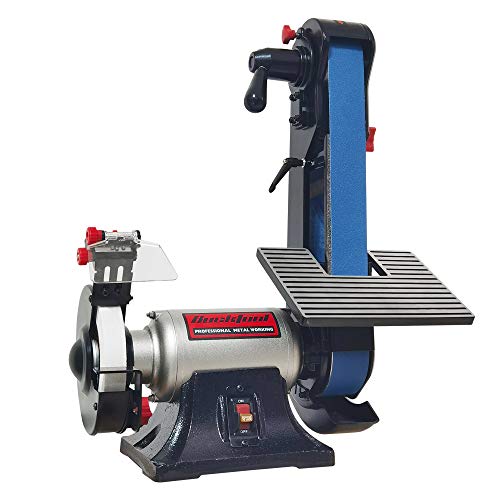
The Bucktool BG2600 combines a 2″ x 42″ belt sander with a 6″ bench grinder in one compact unit. It uses a 1/2 HP induction motor rated for continuous work under load, delivering robust performance for metal, wood, and plastics. With a no-load wheel speed around 3450 RPM and a belt speed near 4480 FPM, it balances aggressive material removal with control. The belt tilts 0 to 90 degrees, and the belt housing swivels between horizontal and vertical, enabling sanding of long pieces or intricate profiles. This versatility makes it suitable for sharpening, deburring, and shaping small to mid-size metal parts in a home or shop setting.
Key advantages include CSA-compliant construction for safety, an integrated large work table for stability, and a dual-task workflow that keeps belt work and grinding accessible from a single machine. Potential limitations are the moderate 1/2 HP motor size for heavy industrial workloads and the need to manage dust and wheel wear during longer sessions. For hobbyists and pros alike, this model provides a practical all-in-one solution without sacrificing precision on both flat surfaces and angled edges.
VEVOR 72×2″ Belt Grinder Sander

The VEVOR belt grinder offers a substantial 2″ x 72″ belt surface driven by a 1500W copper motor, delivering higher torque and durability with quieter operation than typical budget models. It runs at up to 2900 RPM and is designed for metalworking and knife making. The machine uses a VFD for stepless speed control, which lets you dial in the ideal belt speed for different materials and finishes. A notable feature is the inclusion of three grinding moulds and three sanding belts, giving you immediate versatility for coarse beveling, stock removal, and fine polishing.
Operating at 220V, it emphasizes strong tracking and smooth belt alignment, with a caution to ensure proper voltage supply or a transformer if your workshop uses 110V. This model suits serious hobbyists and small shops that need precise speed control for both aggressive material removal and delicate finishing. Its size and power make it less portable than benchtop units but highly capable for frequent, varied projects. For those prioritizing belt length and power, this is a strong contender.
BUCKTOOL Pro 1HP Belt Sander
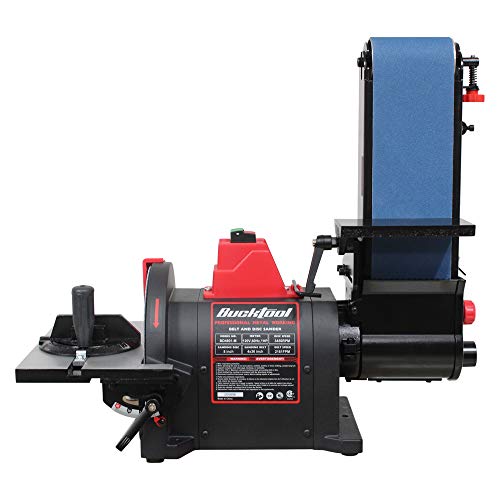
The BUCKTOOL Pro represents a more powerful option in a bench-mounted package, featuring a 1HP direct-drive motor designed for higher efficiency and steady performance. The combination of a belt sander and an 8″ disc adds cross-functional flexibility for metal polishing and shaping. A top-mounted switch keeps controls accessible, and the motor’s direct-drive configuration is marketed as delivering 25% more efficiency than traditional setups. The unit includes a dust port to support cleaner work environments, and its robust aluminum base helps dampen vibrations while you work on long or short pieces. This model is well-suited for metalworking projects requiring more aggressive material removal and consistent results over time.
While offering notable power, buyers should consider footprint and noise levels in smaller shops, and ensure adequate dust collection to maximize tool longevity. The BD4801-M line is built for more demanding tasks than basic hobby work, making it a good fit for serious hobbyists and makers who frequently engage in metal finishing, grinding, and beveling tasks.
Original Multitool 2×36 Belt Grinder Attachment

The Original Multitool belt grinder attachment expands an existing bench grinder into a 2″ x 36″ belt grinding system. It adds three grinding surfaces plus a 7″ disc, offering a compact upgrade for users who want belt grinding without purchasing a standalone machine. Compatibility spans most bench grinders that have a 1/2″ or 5/8″ shaft, and mounting supports horizontal, vertical, or intermediate orientations to fit your workshop layout. This attachment is particularly appealing for hobbyists who already own a grinder and want to extend its capabilities for sharpening, deburring, and bevel work with minimal footprint and cost.
Pros include modularity, flexibility, and the ability to switch between belt and disc work quickly. Potential cons involve the dependency on an existing grinder’s condition and stability, as well as the need for careful belt alignment and tensioning to avoid belt wandering during aggressive grinding. For those seeking a scalable upgrade, this attachment provides a practical bridge to a dedicated belt grinder solution.
KFMK 2×36 Belt Sander Attachment
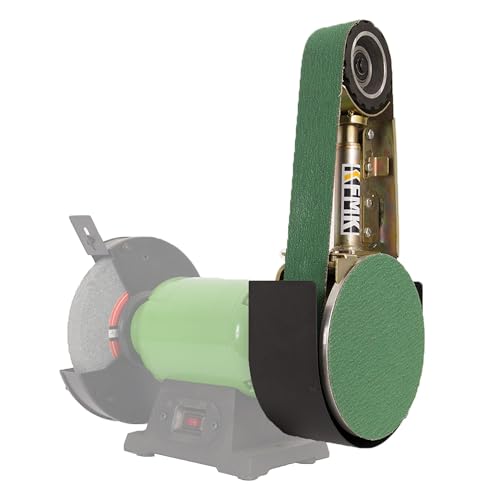
The KFMK 2×36 belt sander attachment is another versatile upgrade for bench grinders with a 5/8″ arbor. It provides a compact belt option for quick material removal, bevel work, and finishing. The design emphasizes adjustability, with three nuts allowing the belt to be positioned at multiple angles to accommodate various sanding tasks. The included 2″ x 36″ belt and compatibility with common 7″ discs provide a broader range of applications for metalworking and knife making. This attachment is well-suited for shop owners who want to expand their grinder’s capabilities without moving to a larger standalone unit.
Considerations include ensuring proper alignment and secure mounting to avoid wobble, especially when performing aggressive grinding. It’s a practical choice for users who value adaptability and space-saving solutions while maintaining effective belt-grinding performance on metal pieces, edges, and bevels.
Buying Guide
Key purchase considerations
Power and speed are central to belt grinders. Look for a motor that matches your workload: 1/2 HP is suitable for light to medium metal finishing, while 1 HP or higher supports heavier stock removal. Variable speed, like a VFD or electronic control, helps you tailor belt speed to material and finish. Belt size matters too: longer belts (2×72) enable longer, continuous passes on flat stock, while 2×36 or 2×42 belts are nimble for intricate work and sharpening.
Versatility: belts, discs, and attachments
Many setups offer both belts and discs, enabling beveling, deburring, and edge finishing in one station. Attachments that convert a standard bench grinder into a belt grinder can be cost-effective entry points, but they rely on the stability and alignment of an existing grinder. Evaluate whether you need a standalone belt grinder with dedicated dust collection, or a modular approach that expands your current toolkit.
Construction, stability, and safety
Solid construction, solid base, and vibration dampening improve precision, reduce fatigue, and protect workpieces. Check for clear belt tracking adjustments, robust belt tensioners, and a secure dust port. Safety features such as guards, spark guards, and easy access on/off switches help protect users during extended sessions. If you plan heavy metal work or knife making, prioritize gear with robust frames and reliable cooling to maintain performance under load.
Maintenance and support
Consider belt availability and replacement costs, ease of belt changes, and track alignment. Machines with modular belts and common belt sizes simplify maintenance. Warranty length and customer support quality are also important, especially for investment-grade equipment intended to withstand frequent use in a metal shop.
Performance comparisons at a glance
Standalone belt grinders with larger motors (1 HP and above) tend to deliver faster stock removal, smoother finishes, and better tracking under load. Attachments offer excellent value for small shops or homeowners who already own a grinder. If your projects demand quick bevel work and consistent finishes across varied materials, prioritize models with adjustable belt angles, reliable dust control, and stable bases to minimize vibration and maintain accuracy.