For hobbyists and small-shop woodworkers, a benchtop drum sander combines precision with a compact footprint. It handles flattening, edge finishing, and stock preparation without the space demands of larger machinery. The right model balances motor power, belt control, dust collection, and ease of belt changes, delivering consistent results across woods and project types. In this guide, five capable benchtop drum sanders from Jet and Shop Fox are evaluated for common shop tasks, including thicknessing, deburring, and final finishing. A quick product summary follows, then in-depth specs and practical notes for each model.
For woodworking projects, these machines offer options from compact 10-inch drums to larger 22-inch drums with smart load sensing. The buying considerations below focus on performance, maintenance, and compatibility with dust collection systems to help you pick the right machine for your workflow.
| Product | Brand | Notable Feature |
|---|---|---|
| Jet JWDS-1020 | Jet | 10″ drum, 1 HP, variable speed, quick belt change |
| Jet JWDS-1632 | Jet | 16″ drum, Sandsmart control, adjustable bed parallelism |
| Jet JWDS-2244 | Jet | 22″ drum, automatic speed regulation, tool-free adjustments |
| Jet JWDS-1632OSC | Jet | 16″ oscillating drum, Sandsmart control, adjustable bed |
| Shop Fox W1854 | Shop Fox | 18″ drum, 1-1/2 HP, 4000 FPM drum speed |
Jet 10-Inch Benchtop Drum Sander JWDS-1020
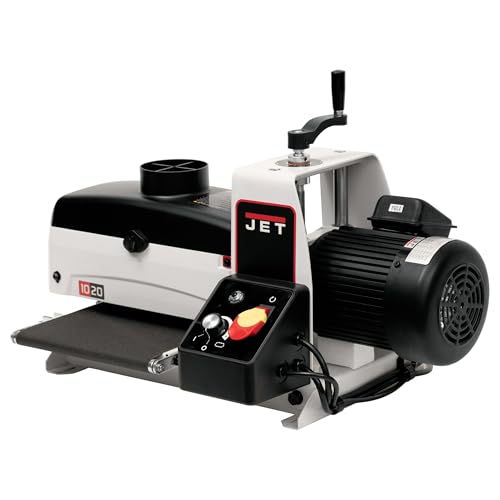
The Jet JWDS-1020 is designed for compact spaces while delivering solid performance. It features a heavy-duty die-cast aluminum and steel body that provides rigidity for consistent surface finishes across stock types. A 1 HP motor at 115V single-phase provides reliable power for light to moderate workloads. Infinitely-variable speed control allows users to tailor the feed rate to material type and project needs, reducing burn marks on soft woods and ensuring smooth finishes. Abrasive changes are quick with toolless take-up fasteners, minimizing downtime between grits and projects.
- Heavy-duty die-cast aluminum and steel body provides rigidity for consistent quality
- Infinitely-variable speed control to select the optimal feed rate
- Toolless abrasive take-up fasteners for quick belt changes
Jet 16-Inch Drum Sander JWDS-1632

The JWDS-1632 brings a generous 16-inch sanding width to the benchtop format. Powered by a 1-1/2 HP motor at 115V, it introduces Sandsmart control, which continuously monitors drum load and regulates the conveyor speed to sustain the highest practical feed rate without overload. The open stand design facilitates large stock handling, while the outside bed dial adjusts conveyor bed parallelism for consistent bed-flat feeding. A dust hood with a patented integrated channel directs chips and dust to a 4″ collection port, helping keep workpieces clean during longer runs.
- Sandsmart control monitors load and maintains feed rate
- Conveyor bed parallelism adjustable via outside bed dial
- Dust hood with integrated channel directs chips to 4″ port
Jet 22-Inch Drum Sander JWDS-2244

The JWDS-2244 expands capacity with a 22-inch drum and a robust 1-3/4 HP motor capable of handling larger panels. Sandsmart control automatically regulates speeds to preserve belt life and optimize feed rate even under heavier loads. The conveyor bed parallelism is easily adjusted via a simple dial on the outside of the bed, and the system offers a stop feature on the parallelism dial to quickly return the bed to a flat position. This model suits shop tasks that involve wide panels, cabinetry panels, and door components.
- Sandsmart control maintains optimal feed under load
- Conveyor bed parallelism dial allows quick, tool-free adjustments
- Parallelism dial features a stop to return bed to flat position
Jet 16-Inch Oscillating Drum Sander JWDS-1632OSC

The JWDS-1632OSC adds oscillation to the 16-inch drum format, which can help reduce gouging on longer panels and produce a smoother finish. Sandsmart control remains at the core, automatically adjusting feed rates based on drum load. The dust hood design includes an integrated channel that mirrors the drum’s shape and directs chips and dust to the 4″ collection port. The bed parallelism dial remains a straightforward, tool-free adjustment, helping keep the workpiece flat and aligned during multiple passes.
- Sandsmart control continuously monitors load
- Dust hood channels debris to 4″ port
- Bed parallelism dial allows tool-free adjustments
Shop Fox W1854 Open-End Drum Sander
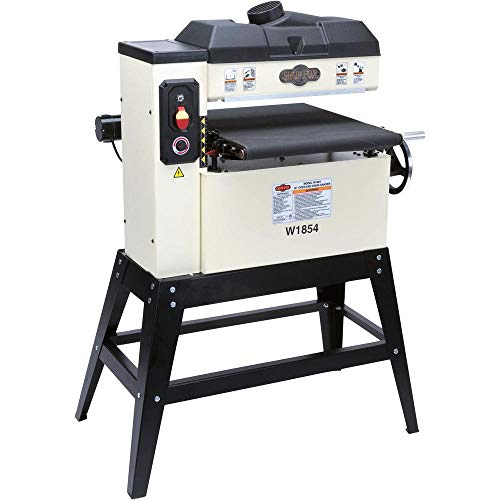
The Shop Fox W1854 Open-End Drum Sander pairs an 18-inch drum with a 1-1/2 HP motor at 110V single-phase power. The drum speed reaches about 4000 feet per minute, enabling efficient stock prep, while the conveyor offers a variable feed rate from 0 to 12 feet per minute for precise control. The unit’s sturdy construction and open-end design support larger panels and face-frame work, making it a practical option for mid-size shops that need serious width without stepping up to industrial machinery.
- 1-1/2 HP motor at 110V
- Drum speed around 4000 FPM
- Variable conveyor feed rate 0-12 FPM
Buying Guide
Key Purchase Considerations
Begin with the size of stock you typically sand. Smaller projects may benefit from a compact 10-inch model, while cabinet doors and face frames gain from 16- or 22-inch drums. Power capability matters when working with hardwoods or denser species; look for at least 1 HP in smaller units and 1-1/2 HP or more for larger drums. Speed control and load monitoring (Sandsmart-style systems) help maintain consistent finishes and extend belt life. Consider dust collection integration, as a 4″ port and a well-designed hood reduce cleanup time and improve visibility during long runs. Lastly, evaluate bed parallelism and how easily you can adjust it to keep pieces flat.
- Drum size versus typical stock width
- Motor horsepower and variable speed control
- Sandsmart or similar load-monitoring features
- Dust collection compatibility and hood design
- Bed parallelism adjustments and ease of use
Performance And Dust Collection
Models with automatic load regulation maintain productive feed rates without stalling or belt slip, ensuring consistent finishes on a range of woods. Dust collection features—such as dedicated 4″ ports and well-shaped hoods—can dramatically improve visibility and reduce cleanup after long sessions. If your shop already uses a dust collector, confirm inlet sizes and compatibility with the sander’s port to maximize suction and minimize chip build-up on the belt and work surface.
- Automatic load regulation helps sustain finish quality
- Efficient dust collection reduces cleanup and improves visibility
- Port sizing and hood design affect suction efficiency
Shop Setup And Maintenance
Benchtop or open-stand designs should fit your space and workflow. Benchtop units save floor space, while open stands allow handling wider stock. Belt changes should be straightforward, ideally with toolless or quick-release mechanisms to minimize downtime between grits. Regular checks on drum alignment, belt tracking, and dust port connections help preserve accuracy and prolong belt life. Consider the available support and replacement belt availability when evaluating models for long-term use in a busy shop.
- Space and workflow alignment (benchtop vs open stand)
- Ease of belt changes and maintenance accessibility
- Availability of replacement belts and service support
Model At A Glance
For small parts and light stock, the 10-inch JWDS-1020 offers a compact, budget-friendly entry with variable speed and quick belt changes. The 16-inch JWDS-1632 and its oscillating counterpart JWDS-1632OSC provide larger width capability, with Sandsmart control and adjustable bed parallelism for consistent finishes. The 22-inch JWDS-2244 is built for wider panels and heavier workloads, featuring automatic speed regulation and tool-free bed adjustments. The Shop Fox W1854 delivers robust 18-inch capacity with a higher drum speed and a flexible feed rate, suitable for mid-size shops handling panels and doors.
Selecting the right benchtop drum sander depends on your typical stock width, preferred finishes, and how much space you can dedicate to sanding equipment. By weighing drum size, motor power, dust collection, and ease of maintenance, you can identify a model that sustains accuracy and productivity across a broad range of woodworking tasks.