Laminate countertops demand clean, chip-free edges and consistent finishes. The right circular saw blade can dramatically improve cut quality, reduce tear-out, and speed up installation. This guide reviews five blades well-suited for cutting laminate countertops, including track-saw blades and fine-finish carbide designs. Each blade is evaluated for diameter, teeth, arbor compatibility, and material resilience, so you can pick the best option for your saw and project. Use the quick summary table below to compare core specs at a glance.
| Product | Diameter | Teeth | Key Feature | Best For |
|---|---|---|---|---|
| Diablo D0652TSL Track Blade | 6-1/2″ | 52 | TiCo carbide; laser-cut kerf | Laminate in track saws |
| FOXBC 7-1/4″ 140T Laminate Blade | 7-1/4″ | 140 | Laminate blade; 5/8″ arbor | Fine finish for plywood/laminate |
| CRAFTSMAN 7-1/4″ 140T Fine Finish | 7-1/4″ | 140 | Hardened plate; precision-ground teeth | Laminate, plywood, plastics |
| IRWIN 7-1/4″ 140T Blade | 7-1/4″ | 140 | Fully-hardened, high-carbon steel | Laminate and plywood |
| WEN 7-1/4″ PCD Diamond-Tipped | 7-1/4″ | 4 teeth (PCD) | Diamond-tipped; ultra-thin kerf | Laminate, hard laminates |
Laminate Track Blade For Fine Cuts

Diablo’s D0652TSL is designed for laminate use within track saw setups. It features a 6-1/2″ diameter and 52 teeth, paired with an 8,800 max RPM rating for controlled, stable cuts in dense panels. The blade’s 1.8mm laser-cut kerf adds rigidity and minimizes wandering, which helps establish straight lines across long laminate panels. TiCo Hi-Density carbide teeth offer extended wear life and consistent edge quality, reducing edge chipping in pre-finished laminates. This blade excels in finish work for cabinetry and countertop installations when mounted on a compatible track system.
With laminate sheets, straightness and edge quality are critical. For best results, maintain a firm fence and steady feed rate, especially on long rip cuts or beveled edges. Ensure your saw’s arbor matches the blade’s hole pattern, typically 5/8″ on most 7-1/4″ track blades. When used correctly, this blade delivers clean edges and minimizes post-cut touch-up, making it a strong choice for laminate countertop projects that require precision and repeatability.
Laminate Finishing Blade 7-1/4-Inch
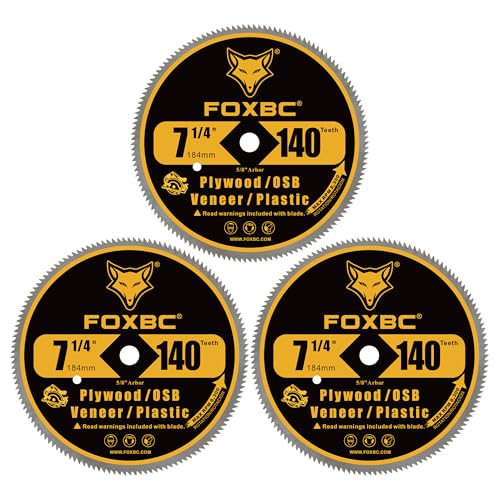
The FOXBC 7-1/4″ 140T laminate blade is built for smooth, tear-out-minimized finishes. With a 5/8″ arbor and 0.086″ kerf, this blade comes in a 3-pack, offering value for multiple projects. The high tooth count provides refined edge quality across plywood, OSB, plastic, paneling, and laminate installations. Its design focuses on fast, precise cuts while reducing surface scoring, making it a practical option for detailed countertop work, bevel cuts, and long rip runs. The blade’s carbide teeth deliver durability for repeated use on dense laminate materials.
When cutting laminate countertops, tooth count and kerf thickness directly impact finish. A higher tooth count improves surface quality, while a thinner kerf minimizes material removal and heat buildup. Pair this blade with a sturdy fence and a clean push to keep edges square and flush. The included 5/8″ arbor is standard, but verify compatibility with your saw’s arbor and any adapters needed for a precise fit.
Craftsman Fine Finish 7-1/4 Blade

The Craftsman 7-1/4″ 140T Fine Finish blade is designed to maintain true cuts with a fully-hardened plate and precision-ground teeth. Its high-carbon steel construction aims to extend blade life while preserving edge integrity through repeated use. This blade is well-suited for plywood, OSB, and plastic, delivering smoother cuts ideal for laminate edge finishing and cabinet fit-ups. For countertop work, its fine-tooth design reduces tear-out on brittle finishes and helps preserve sheet edges during long rip cuts and crosscuts.
The blade’s extended service life comes from a durable construction that resists dulling under heavy loads. When used with a compatible 7-1/4″ saw, it provides stable performance for laminate installations, especially where consistent edge quality matters. Always verify arbor compatibility and use a secure fence or track for straight, safe cuts that minimize chipping around the countertop edges.
Irwin 7-1/4 Inch 140T Blade

The Irwin Classic Series 7-1/4″ 140T blade emphasizes precision-ground teeth and a fully-hardened blade plate to achieve clean, accurate cuts with high longevity. The heavy-gauge steel construction supports extended use through laminates and plywood without excessive dulling. Its standard 7-1/4″ diameter makes it a versatile choice for typical circular saw setups, helping produce smooth finishes on laminate countertops and cabinet panels. The combination of a strong cutting edge and durability supports consistent performance across multiple cuts and material types.
For countertop work, this blade suits general-purpose laminate cutting, especially when a precise, straight cut is required. Maintain a steady feed and use a proper fence to control edge quality and reduce chips. Verify that your saw’s arbor matches the blade’s size and ensure the tooth geometry aligns with the material you are cutting. This blade is a reliable, balance-if-quality option for consistent laminate finishes on a budget.
Wen Diamond-Tipped Laminate Blade
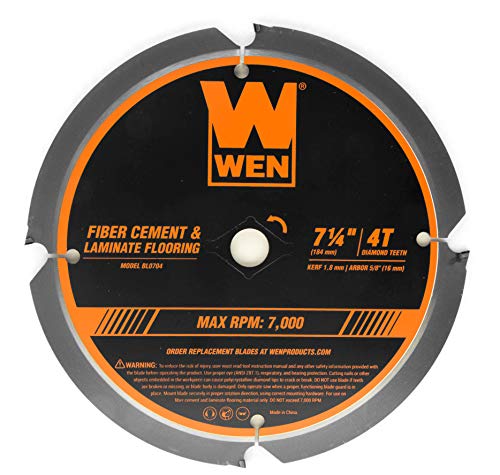
The WEN BL0704 blade uses diamond-tipped teeth to tackle laminate and other hard materials. With a 7-1/4″ diameter, a 5/8″ arbor, and up to 7,000 RPM, this blade is designed for efficient, aggressive cutting across laminate countertops with relatively fewer passes. The ultra-thin kerf, listed as 1/15″ (about 1.8 mm), minimizes material removal and helps reduce chipping near the cut line. The 4-tooth diamond arrangement provides rapid stock removal while maintaining edge fidelity on tough laminates and fiber cement-like layers.
Diamond-tipped blades excel where traditional carbide teeth might wear quickly, especially on dense or layered laminates. For countertop installations, pair this blade with a stabilized fence and ensure proper feed pressure to minimize edge tear-out. The blade’s design supports faster throughput in workshops and reduces the likelihood of scorching or burn marks when used at appropriate speeds. Always confirm compatibility with your saw’s arbor and guard clearance before mounting.
Buying Guide
Key purchase considerations
- Blade diameter and saw compatibility: 7-1/4″ is common for many portable circular saws, but some countertops projects may involve 6-1/2″ or other sizes. Confirm that the blade will mount cleanly on your saw’s arbor (most 7-1/4″ blades use a 5/8″ arbor).
- Teeth count and geometry: Higher tooth counts (e.g., 140T) yield smoother edges suitable for laminate finishes, while lower counts (e.g., 52T) cut faster but with more edge definition and potential chipping. Some blades use a mixed or carbide design to balance durability and edge quality.
- Kerf thickness: Thinner kerfs reduce material removal and heat, helping prevent edge tear-out on laminates. Ultra-thin kerfs can improve edge quality but may require a steadier hand or a fence to maintain accuracy.
- Material and tooth design: Carbide teeth are standard for laminates; diamond-tipped teeth excel on very dense or harder laminates and some vinyl or fiber-cement-like materials. Consider the material you’ll cut most often when choosing between carbide and diamond-tipped edges.
- Arbor compatibility: Most blades in this guide use a 5/8″ arbor, but some specialty tools may require adapters. Always verify the bore size and install with the correct flange and hardware.
- Coatings and tool life: Anti-stick coatings reduce gum-up and friction, particularly with laminated surfaces that may contain adhesives. Hardened plates help maintain true cuts over time, reducing drift.
- Track saw vs handheld: Track-saw blades (like the track blade) emphasize straight, consistent cuts ideal for countertops and long runs. Fine-finish carbide blades are versatile for various cutting tasks, including crosscuts and bevels.
- Safety and technique: Use a stable fence or track, clamp workpieces securely, and maintain a steady, consistent feed. For laminates, avoid aggressive cutting that can cause chipping at the cut edge by easing into the cut and supporting the off-cut side.
What to consider when choosing among the listed blades
- Best finish quality: A high-tooth-count blade (such as 140T) or a blade marketed for laminate finish, like FOXBC, tends to deliver the cleanest edges with minimal tear-out on laminate countertops.
- Best for track saw setups: Track blades like the Diablo option are optimized for straight cuts in track saws, offering rigidity and consistent kerf for long strips.
- Budget-conscious options: Carbide blades with 140T that are designed for general-purpose laminate cuts can balance cost and performance for most countertop projects.
- Specialty requires: When cutting particularly dense or layered laminate materials, a diamond-tipped blade (PCD) like the WEN option can provide lasting edge performance and efficient stock removal.
Usage and safety tips
- Secure your workpiece with clamps and a sturdy fence to minimize drift and chip-out on exposed edges.
- Use push sticks and maintain a steady feed rate to prevent binding or kickback, especially when cutting long panels.
- Keep blades clean and free of adhesive residues that can dull teeth or degrade performance.
- Always wear eye and hearing protection, and check for proper blade alignment before starting the saw.
Choosing the right blade for laminate countertops involves balancing edge quality, cutting speed, noise, and cost. For straight, finish-oriented cuts, blades designed for laminate and track saw applications generally perform best. For denser laminates or harder edge materials, a diamond-tipped blade can maintain edge integrity longer. Always verify compatibility with your specific saw model and track system, and follow manufacturer guidelines for safe operation.