The following selection highlights five top-rated commercial wood chippers that balance power, reliability, and value. Each model is suited for heavy-duty tasks—from large branches to yard waste—while offering features that appeal to professionals and serious homeowners alike. Explore engines, chipping diameters, safety features, and mobility options to determine which unit best supports your workload and workflow.
Summary
| Brand | Model | Max Diameter | Power |
|---|---|---|---|
| EFCUT | C40 | 4 inches | 9 HP / 274cc |
| MechMaxx | B150 | 6 inches | 15 HP / 420cc |
| Yeryork | Wood Chipper 15-Amp | 1.8 inches | 15 Amp motor |
| Patriot | CSV-3090B | 3 inches | 9 HP Briggs |
| BILT HARD | Wood Chipper | 3 inches | 7.5 HP / 224cc |
EFCUT C40 Wood Chipper: 4″ Capacity, 9HP Gas Power

The EFCUT C40 is built for demanding outdoor debris reduction. Powered by a robust 9HP 274cc gas engine, this unit emphasizes fast wood chipping to handle larger piles efficiently. The 4-inch maximum diameter makes it suitable for substantial branches, reducing the volume of material quickly. A larger flywheel and high-speed steel blades contribute to quicker cut cycles, enhancing workflow continuity on job sites.
Mulching performance is a key feature here, with a 15:1 reduction ratio that turns wood waste into mulch with minimal effort. This helps landscaping crews manage cleanup more effectively, converting branches and yard debris into reusable material for soil beds or compost. The combination of power, capacity, and mulch output positions the C40 as a workhorse for mid-to-large scale jobs without frequent downtime.
For safety and maintenance, the C40 integrates standard protections common to gas-powered chippers, while the design emphasizes reliability under heavy use. Operators seeking quick throughput, fewer passes, and a straightforward feed-and-chip experience will find the C40 appealing for residential-commercial edge work.
MechMaxx B150: 6″ Chipping, 15HP Tow-Ready

The MechMaxx B150 is designed for substantial yard and farm tasks, offering a 6-inch maximum diameter capacity and a 15HP, 420cc engine. A key advantage is its mobility and towing capability, supported by a 48-inch wheelbase and a trailer bar. This model includes dual rear wheels and foldable front wheels for ease of movement across job sites, along with a 360-degree discharge chute and adjustable deflector to target debris precisely where you want it.
Safety features are integrated, including an emergency stop and a shutdown trigger when feeding or discharge chutes are opened, helping protect operators during maintenance. The B150 is particularly well-suited for crews that need to move equipment between properties or across uneven terrain, without sacrificing throughput or reliability. With electric-start options and strong construction, it supports longer work sessions with less operator fatigue.
Overall, the B150 balances raw chipping power with practical mobility, making it a strong contender for commercial crews tackling varied yard waste and brush management tasks.
Yeryork Wood Chipper: 1.8″ Feed, 15-Amp Electric

The Yeryork model offers a compact, affordable electric option for smaller commercial tasks or maintenance-heavy workloads. Powered by a 15-amp motor with a maximum 4000 RPM, this unit handles branches up to 1.8 inches in diameter. It features SK5 dual-edge blades designed for durability and cutting performance, with a 21:1 reduction ratio that helps maximize output from every pass.
Durability and weather resistance are emphasized with IPX4 waterproofing and a dent-resistant polypropylene housing, making this chipper suitable for outdoor use in varying conditions. While not as heavy-duty as gas-powered units, its electric design makes it a practical choice for property maintenance crews, landscape contractors, and professional gardeners who prioritize quieter operation, lower fuel costs, and easier maintenance. The Yeryork model is ideal for frequent cleanup tasks and smaller scale commercial jobs where maneuverability and simplicity matter most.
Patriot CSV-3090B Gas Wood Chipper: Leaf Shredder
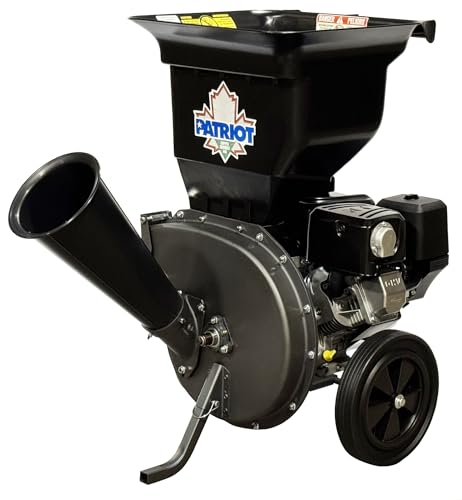
Patriot’s CSV-3090B focuses on robust gas-powered performance with a 9 HP Briggs engine to tackle branches up to 3 inches in diameter. The funnel-style intake design optimizes the chipping process by guiding material efficiently into the cutting zone, which accelerates throughput on busy job sites. A swinging y-hammer system is highlighted for effective leaf shredding, expanding the unit’s versatility beyond simple branch chipping.
The CSV-3090B is well-suited for landscaping firms and municipal maintenance crews that handle a mix of wood and leaf debris. Its reliability, combined with efficient material processing, helps crews maintain cleaner work sites and faster cleanup cycles. While it may not offer the largest diameter capacity in this group, its integrated design and engine performance provide dependable daily output for mid-size operations.
BILT HARD Wood Chipper: 3″ Capacity, 2-in-1

The BILT HARD model blends simplicity and versatility with a 3-inch maximum diameter and a 7.5 HP/224cc engine. Its 2-in-1 design supports both chipping and mulching functions, enabling crews to convert branches into usable mulch or compact wood chips for disposal reduction. A sizeable 2.0 bushel collection bag helps manage cleanup without frequent emptying, which is advantageous for longer work sessions.
Equally important is accessibility: the unit’s straightforward setup and maintenance make it suitable for smaller landscaping crews or property maintenance teams that require reliable performance without heavy complexity. The chipper is designed for durability in field conditions, offering a practical balance of power, capacity, and convenience for routine commercial use.
Buying Guide: Key Purchase Considerations
When selecting a commercial wood chipper, consider the following factors to align with your workload and site conditions.
- Chipper capacity and material type: For frequent large branches, prefer models with 4–6 inch capacity and sturdy blades forged from high-speed steel. For leaf cleanup and smaller debris, 1.8–3 inch models may suffice and often offer lighter weight and lower running costs.
- Power source and mobility: Gas-powered units deliver strong, constant throughput for large jobs, but electric chipper options excel in lower noise, reduced maintenance, and indoor or HOA-friendly settings. Towability and wheel configurations matter if you move machines between properties.
- Discharge design and mulching ratio: A wide discharge chute and adjustable deflector reduce manual handling. High reduction ratios (e.g., 15:1) shorten cleanup time by turning waste into mulch or compact chips.
- Safety features: Look for emergency stops, automatic shutoffs when chutes are opened, and protective guards. Consider coverage of maintenance alerts and reliability features that minimize operator risk during extended sessions.
- Maintenance and durability: Steel rotors, reinforced welds, and quality engine components improve longevity in commercial settings. Check warranty terms and replacement blade availability for long-term cost control.
- Operational cost and noise: Gas-powered units typically incur higher fuel and maintenance costs, while electric models save on fuel but may limit mobility or capacity. Noise levels can affect job-site permissions and neighbor considerations.
- Portability vs. capacity: Heavier machines offer higher capacity but require robust towing or transport options. For frequent site-to-site use, prioritize models with wheels, handles, and stable chassis.
In practice, teams handling varied debris on multiple sites will benefit from a mix of capabilities: a primary heavy-duty gas model for large branches and a lighter electric or compact gas unit for daily cleanup. Evaluating your typical yard waste load, site terrain, and transport needs will guide the best 2–3 piece fleet to maximize productivity while controlling costs.