When it comes to tackling tough cutting jobs, having the right heavy duty reciprocating saw blades can make all the difference. Whether you are cutting thick metal, wood, or mixed materials, the quality and durability of your saw blades determine efficiency and longevity. Below is a summary table of top-performing blades selected for their strength, versatility, and cutting precision.
| Product | Brand | Blade Type | Application | Pack Size |
|---|---|---|---|---|
| DEWALT Reciprocating Saw Blades DW4898 | DEWALT | Bi-metal Combination | Multiple materials | 10 Pieces |
| EZARC Carbide R678HM Endurance | EZARC | Carbide | Thick metal, cast iron | 3-Pack |
| Janchi Heavy Duty Metal Cutting Blades | Janchi | M42 Bi-metal + 8% Cobalt | Thick metal and solid pipes | 5-Pack |
| Milwaukee Sawzall Reciprocating Saw Blade Set | Milwaukee | Thick Bi-metal | Extreme applications | 12 Pieces |
| EZARC Carbide R1243HM Endurance Wood Blades | EZARC | Carbide | Hard wood | 3-Pack |
DEWALT Reciprocating Saw Blades 10-Piece Combo Set

The DEWALT Reciprocating Saw Blades DW4898 set offers a variety of blades suitable for common cutting tasks across different materials. These bi-metal blades provide excellent flexibility and longevity, designed to withstand demanding projects. The set comes with a tough, expandable case designed to fit neatly in your power tool kit box for convenient storage and transport. This combination set is ideal for users seeking versatile blades that perform well on wood, metal, and other materials.
EZARC Carbide Reciprocating Saw Blades R678HM Endurance
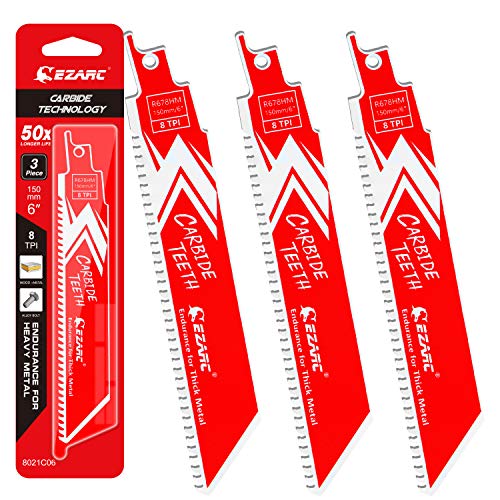
Engineered using advanced carbide technology, the EZARC R678HM blades can last up to 50 times longer than typical bi-metal blades. Their 8 TPI (teeth per inch) design is tailored to cut through demanding metals like high-alloy steels, stainless steels, cast iron, and rebar. Ideal for tough metal cutting applications, these blades excel where others fail, offering durable and sharp cutting edges for long-lasting performance in industrial or heavy-duty environments.
Janchi Heavy Duty Metal Cutting Reciprocating Saw Blades

These 12-inch M42 bi-metal blades with 8% cobalt are designed to withstand heat and stress for heavy metal cutting jobs. The aggressive 14 TPI tooth geometry allows for smooth, fast cuts through thick sheet metal, pipes, and solid profiles. Enhanced with cobalt, the blades resist warping at high temperatures, extending their life and reliability in demanding industrial conditions. The set includes 5 blades, suitable for professionals needing durable, high-performance saw blades.
Milwaukee Sawzall Reciprocating Saw Blade Set, 12 Pieces

Milwaukee’s 12-piece Sawzall blade set features thick blades (.042-inch and .062-inch) designed for extreme cutting applications. These blades provide enhanced durability and strength with a 1-inch height to further improve resistance to bending or breaking. Their wider design makes it possible to access tight spaces, making this set suitable for contractors and tradespeople seeking reliable multi-material blades for challenging tasks in construction and repair.
EZARC Carbide Reciprocating Saw Blades R1243HM for Hard Wood

The EZARC R1243HM blades utilize the same high-performance carbide technology as their metal-cutting counterparts but are specifically optimized for wood cutting. Featuring 3 teeth per inch, these 12-inch blades cut through dense, hard woods efficiently and with minimal effort. This 3-pack offers a long blade life with robust cutting power, ideal for construction professionals and woodworkers facing tough tree trimming and timber cutting jobs.
Buying Guide for Heavy Duty Reciprocating Saw Blades
Selecting the right reciprocating saw blades depends on your project needs, material type, and desired durability. Below are key considerations when choosing heavy duty blades:
Blade Material
Bi-metal blades combine flexibility and toughness, suitable for general-purpose cutting of wood and softer metals. Carbide-tipped blades are far more durable, excel in cutting hardened steel, stainless steel, cast iron, and abrasive materials, and offer up to 50 times longer life.
Teeth Per Inch (TPI)
A blade’s TPI determines cut speed and finish. Lower TPI (3 to 8) means faster, rougher cuts suitable for thick materials like wood and heavy metal, while higher TPI (10 to 14) provides smoother cuts on thinner metals and pipe.
Blade Length and Thickness
Longer blades (10-15 inches) allow deeper cuts needed for thick pipes or dense materials. Thicker blades provide strength and reduce bending or vibration during aggressive cutting in tough materials.
Application Specificity
Consider blades made for your primary material. Metal-specific blades feature tooth geometry and materials tailored for longevity and efficiency on steel and alloys. Wood blades often have fewer, larger teeth for aggressive cuts through timber.
Durability and Heat Resistance
Heavy duty blades often incorporate cobalt or carbide to resist heat buildup, a crucial factor during prolonged cutting sessions on metal to avoid premature dulling or warping.
Blade Design Features
Look for features such as sharpened tooth profiles (e.g., fleam-ground teeth), triple-ground edges, or arc edge designs that reduce friction and improve cutting smoothness and power.