When working on construction or demolition projects involving brick, concrete, or other masonry materials, having the right reciprocating saw blade is crucial for clean, efficient cuts. Below is a summary table of the best masonry reciprocating saw blades selected for durability, cutting performance, and versatility.
| Product | Brand | Blade Length | Tooth Type | Key Features |
|---|---|---|---|---|
| MUOZLOP 12 inch Masonry Reciprocating Saw Blades | MUOZLOP | 12 inch | 2 TPI Carbide | Strong carbide teeth, vibration-reducing thickness, efficient cutting on brick and concrete |
| Demolition Masonry Reciprocating Saw Blade (2-Pack) | PAYA TOOLS | 12 inch | 2 TPI Carbide | Durable carbide strip, optimized weight for low vibration, cuts aerated concrete and hollow bricks |
| MRCGTCE 12-Inch Tungsten Carbide Teeth Blade | MRCGTCE | 12 inch | 2 TPI Tungsten Carbide | Wear-resistant YG8 carbide teeth, strong steel back, versatile for various masonry materials |
| TOLESA Demolition Masonry Reciprocating Saw Blade | TOLESA | 12 inch | Carbide Teeth | High-performance carbide strip, wide and thick blade for stability, cuts aerated concrete and hollow brick |
| EZARC 18-Inch Demolition Masonry Saw Blade | EZARC | 18 inch | Carbide Teeth | Long blade for deep cuts, carbide tooth strip, designed for porous concrete and hollow brick |
MUOZLOP 12 Inch Masonry Reciprocating Saw Blades

The MUOZLOP 12 inch masonry reciprocating saw blade features a 1.5 mm thickness that reduces vibration for improved accuracy and comfort. Its wide blade and brazed carbide teeth enable fast, efficient cutting of bricks, cement, and porous concrete. Designed for durability, the carbide tooth strip has large, strong teeth optimized for masonry, ensuring exceptional wear resistance and stable cutting performance during heavy-duty tasks.
PAYA TOOLS Demolition Masonry Reciprocating Saw Blades 12-Inch 2-Pack

This set by PAYA TOOLS includes two 12-inch carbide blades designed to handle materials conventional bi-metal blades can’t. The blades are optimized for straight cuts in brick, porous concrete, limestone, and cement composite panels. Their weight design reduces vibration and dust, enhancing user comfort and clean work areas. These blades are specifically intended for masonry and are not suitable for wood or plastic cutting.
MRCGTCE 12-Inch Tungsten Carbide Teeth Reciprocating Saw Blade
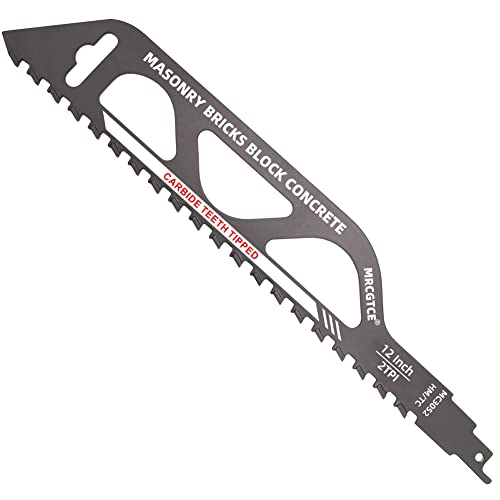
The MRCGTCE 12-inch saw blade boasts YG8 tungsten carbide teeth offering superior wear resistance, strength, and impact toughness. Its durable steel back and large tooth pitch provide maximum cutting efficiency on red and light bricks, fiber cement, aerated concrete, limestone, drywall, and cinder blocks. Suitable for abrasive materials, this blade meets the demands of heavy-duty masonry and demolition jobs.
TOLESA Demolition Masonry Reciprocating Saw Blade 12-Inch

TOLESA’s 12-inch blade features a high-performance carbide teeth strip for enhanced durability during masonry cutting. The wide, thick blade ensures stability and clean cuts on porous aerated concrete and hollow bricks. Designed for demolition work, it offers lasting cutting power but is not recommended for extremely hard materials such as stone or cement blocks.
EZARC 18-Inch Demolition Masonry Reciprocating Saw Blade

The EZARC 18-inch blade is tailored for deep, continuous cuts on aerated concrete, porous concrete, hollow brick, fiber cement, and drywall. Its carbide tooth strip enhances cutting durability and performance while the thick, wide body maintains stability. Ideal for longer, more demanding masonry cutting sessions, this blade extends capacity with its 18-inch length allowing complete block cutting in a single pass.
Buying Guide: Key Considerations for Masonry Reciprocating Saw Blades
Choosing the optimal masonry reciprocating saw blade depends on the materials you intend to cut, blade durability, cutting precision, and job demands. Below are critical factors to evaluate before purchasing.
Material Compatibility
Check blade tooth composition and design to ensure suitability for masonry materials like brick, concrete, aerated blocks, or fiber cement. Carbide-tipped and tungsten carbide teeth offer excellent wear resistance for abrasive masonry, while diamond-grit edges are preferred for harder or specialty materials like cast iron or fiber fiberglass.
Blade Length and Tooth Pitch (TPI)
Blade length should match the thickness of the material and the required cutting depth. Longer blades (12 to 18 inches) can handle deeper cuts. Tooth pitch, measured in teeth per inch (TPI), affects cutting speed and finish; lower TPI (e.g., 2 TPI) blades provide aggressive, fast cutting in masonry but rougher edges, while higher TPI suits finer, controlled cuts.
Durability and Strength
Look for heavy-duty blades with thick steel backs and brazed carbide or tungsten carbide teeth. These features improve blade life, reduce bending, and withstand demolition stresses without frequent replacement.
Vibration and Dust Management
Blades with weight optimization and vibration-reducing thickness improve operator comfort and cutting accuracy. Some designs also minimize dust generation, contributing to cleaner workspace and health safety.
Application Specificity
Some blades excel at cutting porous materials like aerated concrete and hollow brick but are not suitable for harder masonry like cement blocks or natural stone. Confirm blade intended use to avoid premature wear or inefficiencies.