Portable cement mixers simplify on-site batching by combining cement, sand, and aggregate quickly and consistently. The right unit balances drum capacity, motor power, and portability to fit your project size. For DIY duties, small contractor tasks, or light agricultural mixing, a portable mixer should be easy to move, durable, and simple to clean. In the following guide, five top-performing models are reviewed for reliability, ease of use, and value. Use the buying guide to compare capabilities and determine which mixer best matches your typical workloads and worksite conditions.
Summary table of chosen models for quick comparison:
| Product | Brand | Capacity (cu ft) | Motor (W) | |
|---|---|---|---|---|
| BILT HARD 4 Cu Ft Portable Cement Mixer | BILT HARD | 4.0 | 500 | Poly drum; 15″ opening; rust-resistant frame |
| BILT HARD 4 Cu Ft 550W Cement Mixer | BILT HARD | 4.0 | 550 | Triangular bracket; powder-coated finish |
| XtremepowerUS 4.6 Cu Ft Cement Mixer | XtremepowerUS | 4.6 | 560 | Direct drive gearbox; copper wiring |
| TABU 5.0 Cu Ft Electric Cement Mixer | TABU | 5.0 | 400 | 360° mixing; rust-resistant; safety lock |
| SPECRAFT 4.9 Cu Ft Electric Cement Mixer | SPECRAFT | 4.9 | 550 | 140L drum; sealed drum; 22.4″ opening |
BILT HARD 4 Cu Ft Portable Cement Mixer

The BILT HARD 4 Cu Ft Portable Cement Mixer pairs a 500W, 120V motor with a robust 4.0 cubic foot poly drum, enabling concrete, mortar, or stucco mixing at speeds up to 1680 RPM and a practical 24 RPM mixing rate. The 15-inch drum opening simplifies adding dry mix and scooping finished batches. Its heavy-duty poly drum resists dents and rust and is easy to clean. A powder-finished steel frame provides extra durability for on-site work, making it suitable for both small commercial tasks and agricultural mixing, including seed inoculation and feed blending.
Users will appreciate the straightforward setup and stable operation on level ground. While compact, the mixer still supports frequent use on job sites; its balance of capacity and portability makes it ideal for homeowners tackling patios, driveways, or light commercial jobs where a quick batch is preferred to contractor-grade gear.
BILT HARD 4 Cu Ft 550W Cement Mixer

This model features a 550W, 120V motor delivering up to 1750 RPM, with a 26.7 RPM mixing rate for efficient blending of stucco, mortar, or concrete. A 4 cu ft drum capacity (roughly 113 liters) and a 15-inch drum diameter keep batching straightforward, while a powder-coated finish on the frame enhances durability. The mixer’s triangular bracket design adds extra stability during operation, making it well-suited for longer mixing sessions or moderate-sized projects on construction sites, farmyards, or landscape installations.
Its portability remains a key advantage, with wheels and handles designed to move across uneven surfaces. This unit is a pragmatic middle-ground option for users who need reliable daily use without the added weight of larger concrete mixers.
XtremepowerUS 4.6 Cu Ft Cement Mixer

The XtremepowerUS 4.6 cu ft mixer emphasizes a direct-drive gearbox, simplifying assembly and reducing belt wear. A 560W motor powers a 4.6 cubic foot drum to deliver consistent batches for concrete, mortar, stucco, seed inoculation, and feed mixing. The unit’s 100% copper-wired motor supports reliable performance, while the direct-drive design helps with durability and long-term use on mid-sized projects. Its tilting drum and sturdy frame are designed for frequent use, with straightforward maintenance and quick cleaning after batches.
Ideal for hobbyist contractors and home workshops, this mixer balances power and portability, enabling efficient mixing without overpowering the worksite. It is suitable for users who perform regular small- to mid-scale projects but still require dependable operation and easy transport.
TABU 5.0 Cu Ft Electric Cement Mixer
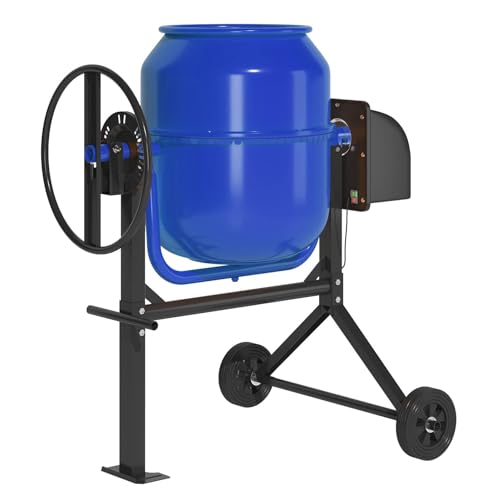
The TABU 5.0 Cu Ft mixer runs on a 400W motor at a steady 36 RPM, delivering robust performance for concrete, stucco, mortar, and even agricultural materials like seeds and feed. The 15-inch drum opening simplifies the addition of dry materials, and the rust-resistant construction eases cleanup after use. A 360° mixing capability and a safety lock for adjustable tilt provide control and safety during pouring into wheelbarrows or forms. This model emphasizes user-friendly operation and convenience for small to medium-scale tasks on home or site projects.
Its freestanding design with wheels enhances portability, making it a practical choice for tasks that require frequent relocation between work zones, such as landscape installations or small building projects. The emphasis on rust resistance and ease of cleaning supports long-term maintenance with minimal downtime.
SPECRAFT 4.9 Cu Ft Electric Cement Mixer
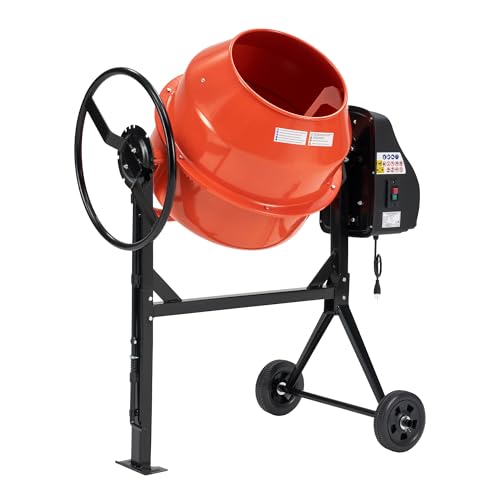
The SPECRAFT 4.9 cu ft mixer is driven by a 550W motor at 30 RPM, ideal for concrete, mortar, stucco, and agricultural mixing. The 140L drum capacity supports sizable batches while maintaining a consistent blend. A large 22.4-inch opening simplifies adding dry materials, and a one-button start plus a sealed drum reduces leaks during operation. The unit’s rust-resistant steel construction and the included smooth interior promote steady performance across repeated sessions, making it a solid option for hobbyists and light commercial tasks alike.
Buying Guide
Choosing a portable cement mixer involves balancing capacity, power, and portability with the nature of your projects. The following considerations help narrow options and clarify trade-offs across models.
Capacity And Power
Capacity, measured in cubic feet, determines how much concrete you can mix per batch. Heavier work benefits from larger drums (4–5 cu ft), while smaller tasks demand lighter units (2–3 cu ft). Motor power, expressed in watts, relates to how quickly materials blend and how well the mixer handles denser mixes. For frequent use or larger batches, aim for 550W–600W with a robust drive system to minimize stall and overheating.
Drum Design And Access
Drum material and opening size influence durability and ease of loading. Poly drums resist corrosion and are lightweight, but may wear over time with heavy use. A wider drum opening (around 15 inches) reduces spill risk and makes adding dry mix simpler. Drums with a smooth interior and accessible tilting drive help maintain consistent batch quality and easier cleaning.
Portability And Setup
Portability features such as wheels, handles, and a compact footprint reduce fatigue on the job site. Weight distribution and frame sturdiness affect setup time and stability on uneven surfaces. If you move between locations or stairs, look for lighter weight with integrated wheels and a stable stand. Direct-drive gearboxes can simplify the design and reduce maintenance compared with belt-driven systems.
Durability And Maintenance
Durability hinges on frame construction, corrosion resistance, and ease of component replacement. Powder-coated frames and rust-resistant drums extend life in outdoor use. Consider models with accessible parts and straightforward disassembly for cleaning and service. Regular maintenance—checking seals, lubricants, and motor cooling—extends motor life and reduces downtime.
Safety And Warranty
Safety features include secure drum locks, splash guards, and safety interlocks to prevent accidental start-up. A clear tilt mechanism and locking features help control spills during pouring. Warranties vary; longer coverage can reduce long-term ownership costs and provide peace of mind for frequent users or commercial settings.
Applications And Versatility
Match the mixer’s capacity and power to your typical tasks. For DIY projects and small renovations, a 4 cu ft mixer with a 500–550W motor offers ample capability. For farm or landscape projects involving seed or feed mixing, choose a model with stable operation and easy cleaning. If noise and heat management are concerns on residential sites, look for units with efficient cooling and quieter operation. Consider future needs—if you anticipate scaling up, select a unit with potential for accessories or higher-capacity drums.
In short, the best portable cement mixer for you blends adequate batch size with workable weight and durable construction. Assess on-site mobility needs, typical mix types, and maintenance expectations to select a model that balances performance and practicality over time.