When tackling tough materials like hardened steel, cast iron, and high-alloy metals, choosing the right reciprocating saw blade is crucial for efficient, clean cuts and blade longevity. This guide details the best saw blades designed specifically for metal cutting, including carbide-toothed and bi-metal options optimized for durability and performance.
| Product | Brand | Cutting Application | Key Feature |
|---|---|---|---|
| EZARC Carbide Reciprocating Saw Blade R678HM Endurance 6-Inch 8TPI (3-Pack) | EZARC | Thick Metal, Cast Iron, Alloy Steel | Carbide Teeth for 50x Longer Life, Heavy Metal Cutting |
| HardWin Carbide Reciprocating Saw Blade 6-Inch 8 TPI (3-Pack) | HARDWIN | Hard Metals, Cast Iron, Alloy Steel | 30x Longer Life, Anti-Binding Wavy Tooth |
| Diablo Steel Demon Carbide Teeth Reciprocating Saw Blades 6″ 3 TPI (3-Pack) | Diablo by Freud | Thick Metal 3/16″ to 9/16″ | Hi-Performance Carbide, Less Vibration |
| TOLESA Heavy Metal Cutting Bi-Metal Reciprocating Saw Blades 6 Inch 14TPI (5-Pack) | TOLESA | Medium-Thick Sheet Metal, Pipes | Cobalt Edge, Thin Wall for Heat Reduction |
| Diablo Steel Demon Carbide Teeth Reciprocating Saw Blade 6″ 8 TPI | Diablo | Extreme Metal Cutting 3/16” to 9/16” | Ultra-Hardened Carbide, Perma-SHIELD Coating |
EZARC 6-Inch Carbide Reciprocating Saw Blades for Thick Metal (3-Pack)
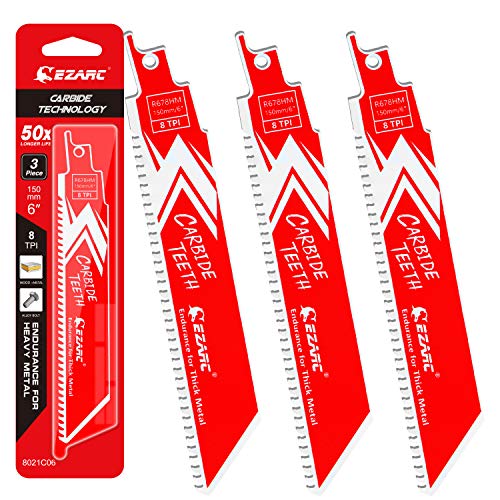
The EZARC Carbide Reciprocating Saw Blades feature advanced carbide technology designed for cutting through heavy-duty metals such as stainless steel, high-alloy construction steels, and hardened steel. With 8 teeth per inch (TPI), these blades provide a balance between cutting speed and smoothness, making them ideal for thick metals, cast iron, and car beams.
EZARC claims that the carbide tips provide up to 50 times longer life than traditional bi-metal blades, significantly reducing wear in challenging applications. These blades maintain cutting efficiency where regular bi-metal blades often fail, making them a solid choice for professionals and DIYers handling tough materials.
HardWin 6-Inch Carbide Reciprocating Saw Blades, 8 TPI (3-Pack)

HardWin’s reciprocating saw blades feature premium carbide-tipped teeth designed to last up to 30 times longer than standard bi-metal blades. Their 8 TPI anti-binding wavy tooth design enhances cutting smoothness and speed for thick metals, including stainless steel, hardened steel, and cast iron.
Precision-milled and individually welded teeth deliver burr-free cuts, maintaining durable performance even under heavy use. These blades efficiently cut metal ranging from 3/16″ to 1/2″ thick, making them suitable for rebar, steel beams, and piping.
Diablo Steel Demon Carbide Teeth Reciprocating Saw Blades 6-Inch 3 TPI (3-Pack)

Diablo Steel Demon carbide blades are crafted for extreme metal cutting with a 3 Teeth Per Inch (TPI) layout ideal for thick metals ranging from 3/16″ to 9/16″. The blades include an oversized 1″ wide body to provide straighter cuts with less vibration, resulting in enhanced control and reduced operator fatigue.
Constructed with high-performance carbide teeth, these reciprocal saw blades excel in cutting hardened steel and cast iron, where precision and durability are essential for professional-quality results.
TOLESA 6-Inch Bi-Metal Reciprocating Saw Blades 14 TPI (5-Pack)

The TOLESA blades feature a bi-metal construction with a cobalt edge designed for cutting through sheet metal, metal pipes, and profiles up to 4 inches in diameter. With a 14 TPI design, these blades are well-suited for medium-thickness metals requiring both faster cutting speeds and durability.
The thin 0.9 mm wall thickness and set teeth reduce heat buildup, which improves cutting efficiency and blade life during demanding applications. These blades deliver strong performance on demolition or metal fabrication jobs where moderate thickness sheet and pipe cutting are frequent.
Diablo Steel Demon Carbide Teeth Reciprocating Saw Blade 6-Inch 8 TPI

This Diablo carbide-tipped blade is optimized for cutting extreme metal materials like high-strength alloys, stainless steel, and cast iron, handling thicknesses from 3/16” to 9/16”. The TiCo Hi-Density carbide blade provides up to 50 times longer life than standard bi-metal blades under intense metal cutting workloads.
It also features Perma-SHIELD non-stick coating to resist heat, gum buildup, and corrosion during heavy use. The enhanced carbide tip connection improves impact resistance, ensuring reliability in tough metal cutting environments.
Buying Guide: Choosing the Best Reciprocating Saw Blades for Hardened Steel
Material and Tooth Design
Carbide-tipped blades offer superior durability and cutting power on hardened steel and high-alloy metals compared to bi-metal blades. For thick or extremely hard materials, carbide is recommended for long-lasting performance. Bi-metal blades are generally suitable for medium-thickness metals and offer better flexibility at a lower cost.
Teeth Per Inch (TPI)
The blade’s TPI determines the cut’s smoothness and speed. Lower TPI (3-8) blades cut faster and deeper, ideal for thick metals, but may result in rougher finishes. Higher TPI (10-14) blades provide smoother cuts but are best for thinner metals to avoid overheating and binding.
Blade Thickness and Width
Thicker, wider blades reduce vibration and produce straighter cuts but can be less maneuverable. For heavy-duty cuts in hardened steel, choose blades with robust body construction to enhance stability.
Heat Resistance and Coatings
Blades that incorporate special coatings like Perma-SHIELD or thin-wall designs help dissipate heat, reducing blade warping and extending life during continuous metal cutting.
Compatibility and Shank Size
Ensure the blade fits your reciprocating saw’s blade clamp system. Most blades come with universal shank sizes (usually 1/2 inch), but verify compatibility, especially when purchasing specialized blades.
Durability and Weld Quality
Blades with individually welded carbide teeth offer enhanced durability and consistent cutting performance. Poorly welded or stamped blades may fail prematurely on hardened steel.
Cutting Thickness Range
Select blades rated for the thickness of material you plan to cut. Carbide blades generally handle thicker metals, while bi-metal blades excel in medium thickness applications.