Choosing the best table saw blade for plastic requires a blend of sharp cutting performance, durability, and minimizing material melting. This guide reviews top-rated 10-inch and 8-1/4-inch blades tailored to smoothly cut plastic sheets, PVC pipes, and other non-ferrous materials. Below is a summary table highlighting key specs of the selected blades ideal for plastic cutting tasks.
| Product | Teeth | Diameter | Kerf | Special Features |
|---|---|---|---|---|
| Freud LU94M010 Plastic Blade | 80 | 10″ | .110″ | MTCG Tooth Design, TiCo Carbide |
| FOXBC 10-Inch Metal Cutting Blade | 80 | 10″ | .094″ | Laser-Cut Stabilizer Vents, Tungsten Carbide |
| FOXBC 8-1/4 Inch Metal Cutting Blade | 80 | 8-1/4″ | .087″ | Diamond Knockout, Laser-Cut Vents |
| IVY Classic 35056 Swift Cut Blade | 200 | 10″ | N/A | High Carbon-Alloy Steel, For Thin Plastics |
| CMT K20010 Contractor Plywood Blade | 200 | 10″ | .095″ | Smooth Crosscuts, 5° Hook Angle |
Freud LU94M010 10″ Plastic Cutting Saw Blade

The Freud LU94M010 is specially designed for cutting plastic, featuring a 10-inch diameter and 80 teeth arranged in a Modified Triple Chip Grind (MTCG) tooth pattern. This shape is excellent for keeping plastic cool during the cut, reducing the risk of melting. The TiCo HI-Density Carbide blend ensures durable performance and long blade life. A −3° hook angle helps control feed rate and minimize chipping, while a kerf of .110 inches balances material removal and speed, making it highly effective for hard plastics and composites.
FOXBC 10-Inch 80-Tooth TCG Blade for Plastic & Metals

This 10-inch FOXBC blade excels at cutting non-ferrous metals and plastics due to its 80-tooth triple-chip grind (TCG) design. The kerf measures a precise 0.094 inches, offering a fine cut with less material waste. Its laser-cut stabilizer vents reduce vibration and noise for clean, accurate cuts every time. The tungsten carbide teeth provide outstanding toughness and wear resistance, ensuring a long-lasting edge for frequent cutting of softer materials like PVC, fiberglass, and aluminum.
FOXBC 8-1/4 Inch 80-Tooth TCG Plastic & Metal Blade

Smaller projects involving plastic sheets or lightweight metal benefit from the 8-1/4 inch FOXBC blade. Like its 10-inch counterpart, it features 80 TCG teeth with laser-cut stabilizer vents that reduce noise and vibration. The kerf width is a thin 0.087 inches, ideal for delicate cuts requiring precision. Its diamond knockout allows easy blade changes. This blade’s high-density tungsten carbide composition ensures durability and clean finishes on materials like brass, copper, and non-ferrous plastics.
IVY Classic 35056 Swift Cut 10″ 200 Tooth Blade for Plastic
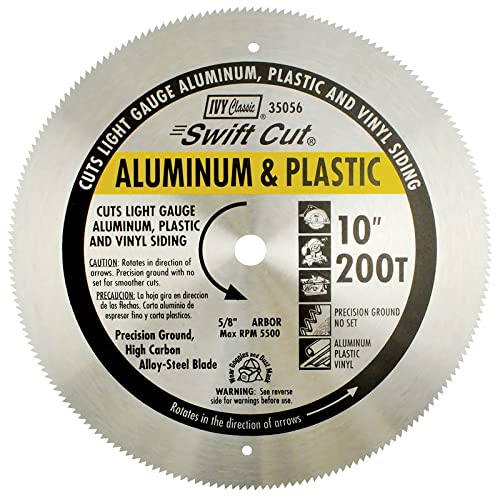
The IVY Classic Swift Cut blade is a high-tooth-count steel blade designed to cut plastics and light gauge aluminum with a remarkable 200 teeth count, perfect for ultra-smooth edge finishes. Suitable for materials up to 1/8-inch thick, it uses a high carbon-alloy steel construction for durability and precision. While lacking carbide tips, its fine tooth density reduces chips and tears on vinyl siding and softer plastics, especially when perfect edge quality is a priority.
CMT K20010 Contractor 10″ 200 Teeth Plastic and Plywood Blade

The CMT K20010 features a 200 tooth count with a thin kerf of 0.095 inches and a subtle 5° hook angle designed for smooth crosscuts in plywood, OSB, and plastics alike. This blade excels in providing clean edge finishes on non-ferrous materials and plastic laminates, minimizing burn marks and melting. Its contractor-grade construction offers longevity, ideal for users needing versatility between wood and plastic cutting tasks.
Buying Guide for Table Saw Blades for Plastic
Choosing the optimal table saw blade for plastic involves evaluating several critical factors to ensure clean, efficient cuts without material damage.
Blade Diameter and Arbor Size
Most blades for plastic come in standard diameters of 8-1/4 inches or 10 inches and typically use a 5/8 inch arbor. Ensure compatibility with your saw’s arbor for safety and performance.
Number of Teeth and Tooth Design
Higher tooth counts (80 to 200 teeth) generally provide smoother cuts on plastic, reducing chipping and splintering. Tooth designs like Modified Triple Chip Grind (MTCG) or Triple Chip Grind (TCG) are excellent at producing clean edges while keeping the material cool to prevent melting.
Kerf Width
A thinner kerf (under 0.1 inches) minimizes waste and requires less power, but extremely thin kerfs may reduce blade durability. Medium kerfs balance cutting speed, smoothness, and blade life.
Material and Tooth Composition
Blades tipped with high-density carbide (such as TiCo or tungsten carbide) maintain sharpness much longer than steel-only blades, especially useful when cutting abrasive plastics or composites.
Blade Hook Angle
Negative or shallow hook angles (e.g., −3° to 5°) help control feed rate and prevent plastic melting or melting caused by excessive friction and heat build-up.
Vibration and Noise Reduction Features
Blades with laser-cut stabilizer vents reduce vibration and noise, improving cut precision and operator comfort during extended use.
Material Thickness and Type
Match the blade to your plastic thickness and hardness. Thin plastics may require finer tooth spacing, while thicker plastics demand sturdier blades with fewer teeth but larger gullets.
Compatibility with Other Materials
If you plan to cut non-ferrous metals alongside plastics, blades designed for both materials (metal/plastic cutting blades) offer versatility and cost savings.